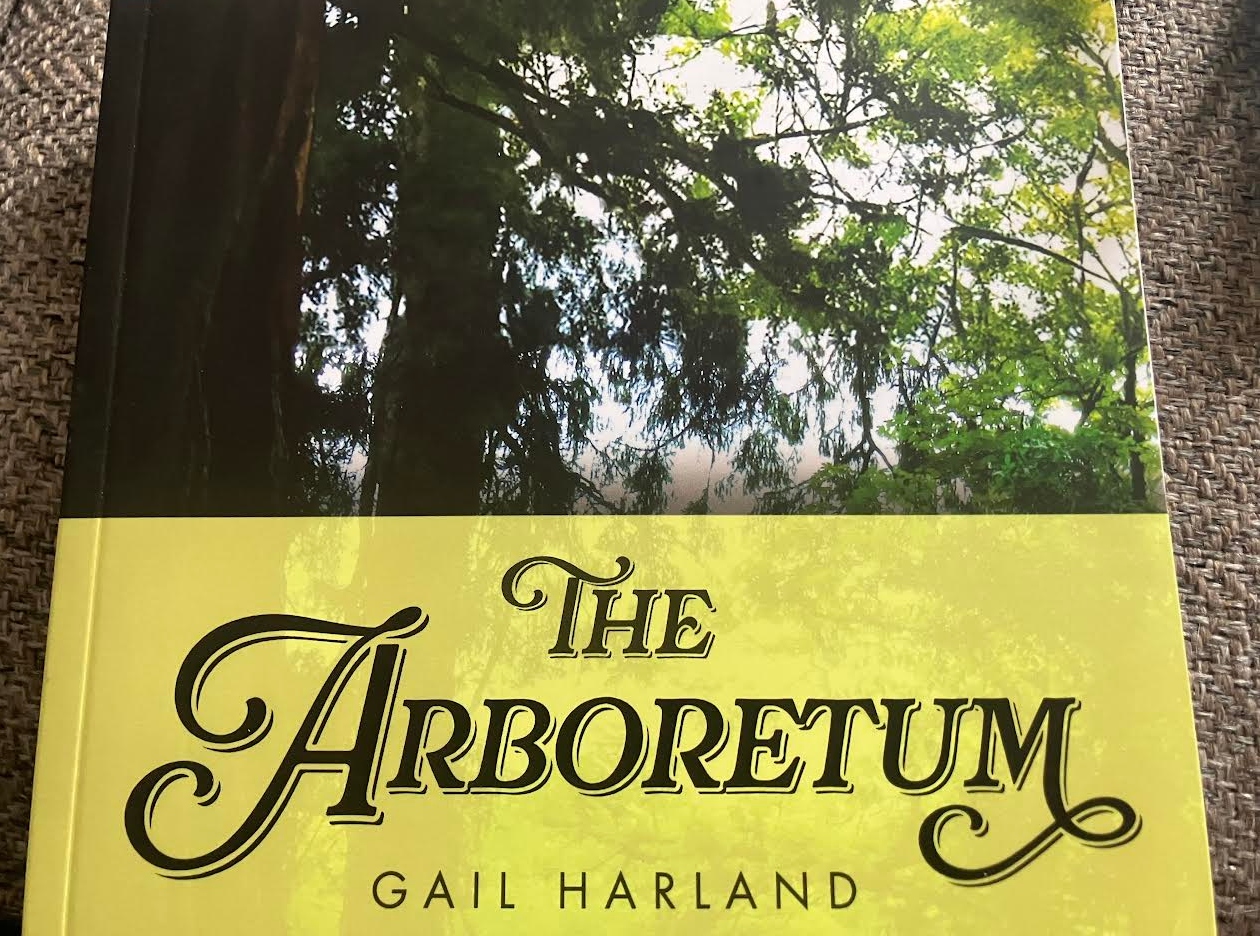
From pharaohs to polar bears, arboretums are far more than curated collections of trees—they are living archives of human history, memory and imagination. In this richly textured and wide-ranging book, Harland invites readers to wander through those archives, showing how trees have rooted themselves in politics, art, literature and collective grief.
We begin in ancient Egypt, with Hatshepsut (c.1507–1458 BC), who famously organised expeditions to Punt to bring back exotic myrrh trees for her temple complex, an early example of botanical ambition as political theatre. From there, Harland’s narrative branches outward, eventually arriving in modern Britain at the National Memorial Arboretum, where a polar bear memorial commemorates the 49th (West Riding) Infantry Division, whose emblem reflected their Arctic service in Norway and Iceland during the Second World War. The juxtaposition is typical of Harland’s method: centuries collapse, geographies blur, and trees stand quietly at the centre.
Cultural meanderings abound. Harland moves easily from botany to myth, drawing in the living trees of The Lord of the Rings, the haunted woods of Macbeth, and the enchanted forests of Harry Potter. These literary excursions never feel indulgent; rather, they reinforce his central insight that trees are never merely biological specimens. They are characters, witnesses and sometimes agents in our stories.
History’s darker chapters are present too. The Tolpuddle Martyrs’ sycamore stands as a symbol of protest and endurance, but Harland reminds us that it is far from unique. Trees have become flashpoints of resistance and sacrifice; people have died attempting to protect ancient woodlands. Yet he balances this with a more hopeful truth: far more trees have been planted than felled in acts of remembrance.
No contemporary reflection on trees would be complete without Sycamore Gap, the beloved Northumberland tree whose destruction shocked the public and crystallised the emotional bond between people and place. The grief it provoked revealed how deeply trees inhabit our cultural and personal landscapes.
Art, too, threads through the narrative. Harland reflects on the paradox articulated by J. Paul Getty, that art collecting can bring pangs of guilt, as masterpieces are hidden away from public view. Arboretums, by contrast, offer collections that are at once curated and communal. Trees cannot be locked in vaults. They demand light, weather and witnesses. In this sense, arboretums democratise the collector’s impulse: they gather treasures not to conceal them, but to share them.
The book’s illustrations are particularly striking. Reproductions of fine art sit alongside archival material and contemporary photography, illuminating the text without overwhelming it. They reinforce Harland’s argument that our engagement with trees is as much aesthetic as ecological.
If the book has a single thesis, it is this: there are many ways to love trees. We may revere them as sacred, study them as scientists, plant them as memorials, imagine them into myth, or curate them as living collections. Harland does not rank these impulses; instead, she shows how they interweave. By the end, the arboretum emerges not as a niche institution but as a microcosm of civilisation itself, rooted in the past, branching into the future, and sustained by the quiet, persistent life of trees.